

Automobile parts
When disassembling a modern car, a significant change becomes apparent: beneath the engine hood, inside the doors, and even around the chassis, more and more components are no longer made of metal but of plastic. This is a "lightweighting revolution" that has been ongoing in the automotive industry for several years.
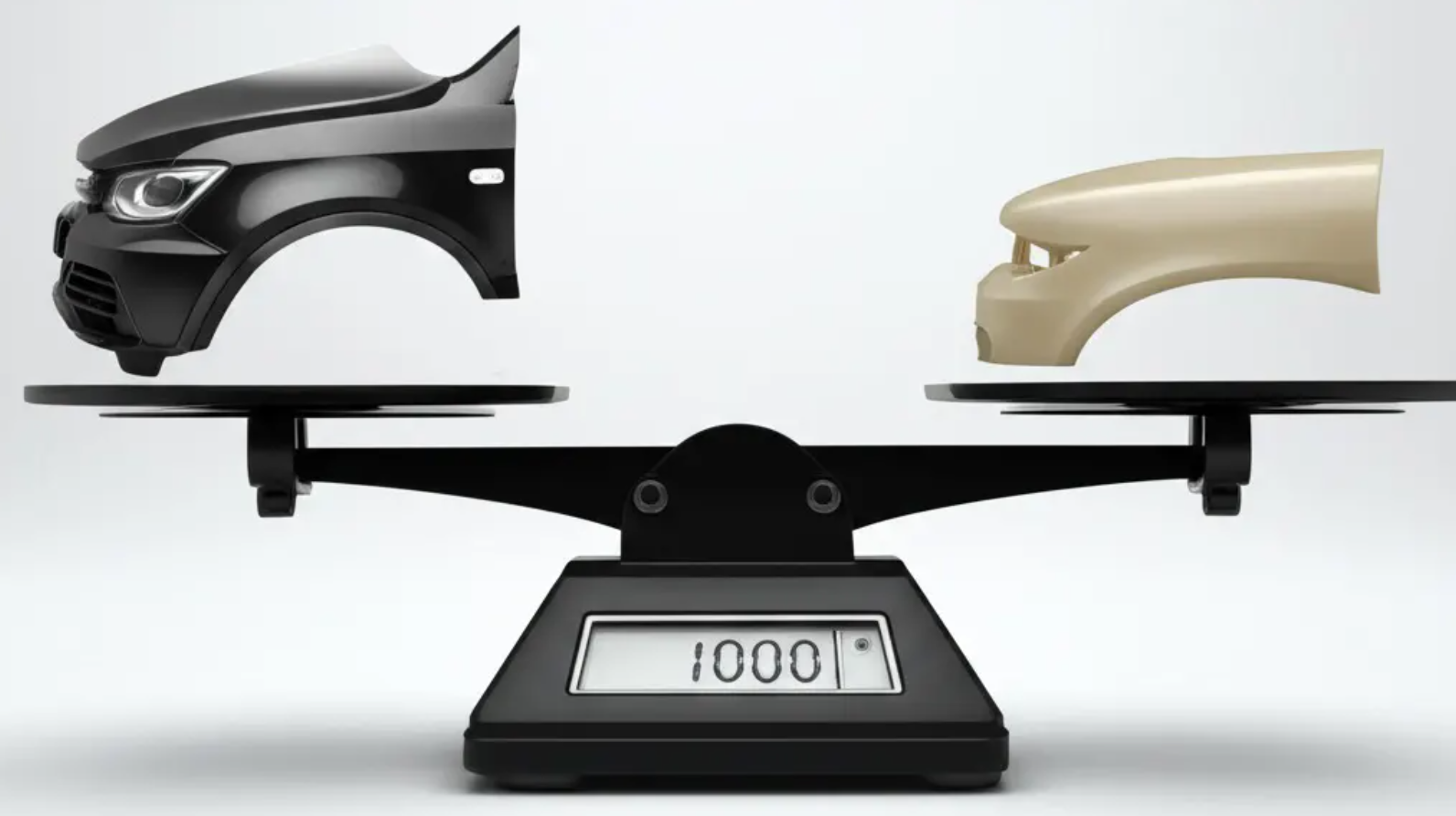
I. Why do car manufacturers insist on reducing weight?
The most direct driving force is fuel consumption and emission regulations. Countries have increasingly strict requirements for the average fuel consumption of new vehicles. For every 100 kilograms of weight reduction, the fuel consumption per 100 kilometers can be reduced by 0.3 to 0.5 liters. Electric vehicles can even increase their range. Weight reduction is cheaper and more direct than improving engine technology.
The second reason is the range anxiety of electric vehicles. Batteries are heavy, and if the vehicle uses a large amount of steel, the range will be difficult to improve. Therefore, electric vehicle manufacturers have a higher acceptance of plastics and composite materials than traditional car manufacturers.
The third reason is performance and safety. After lightweighting, the acceleration, braking, and handling of the vehicle will improve. Moreover, plastic has good toughness and can absorb energy during a collision, which is actually safer than some metal parts.
II. Why can plastic replace metal?
Many people think that plastic is "not sturdy", but the engineering plastics used in cars are far from the concept of ordinary plastic bottles. Take nylon (PA) as an example. When 30% to 50% of glass fibers are added, its strength and rigidity can be comparable to or even exceed those of certain aluminum alloys, while the weight is only about half.
In addition, "plastic" has several key advantages:
• Design flexibility: Injection molding can produce very complex shapes, while metal may require stamping and welding multiple parts to achieve the same result. Plastic can be molded in one step.
• Corrosion resistance: Plastic is not affected by salt fog, acid rain, or de-icing agents, and it does not rust.
• Noise reduction and vibration damping: The damping properties of plastic are better than those of metal, and it can absorb vibrations and noise.
• Integrated functions: Parts such as clasps, screw columns, and reinforcing ribs can be directly made on the parts themselves, reducing assembly processes.
Of course, plastic also has weaknesses: It is prone to softening at high temperatures, will creep under long-term load, and will age under ultraviolet rays. Therefore, substitution is selective - internal components of the engine are not suitable, but peripheral components of the engine can be.
III. Which components have been successfully replaced?
The following components have been largely replaced by plastic in mainstream vehicles, and some have been used for over 20 years. For example:
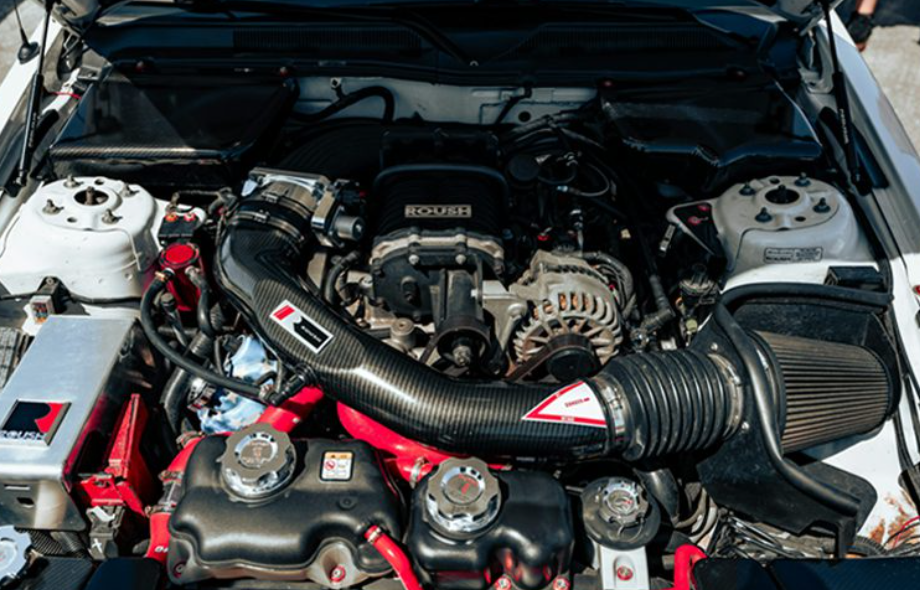
Intake manifold: This is the most classic example of substitution. In the early days, it was made of aluminum casting, and now most passenger cars use glass fiber reinforced nylon (PA6 or PA66 GF30). The plastic inner wall is smooth, the intake resistance is low, and it can reduce approximately 40% of the weight.
Engine hood and valve cover: The previous engine top cover was a metal stamping part, and now it is commonly made of heat-resistant thermoplastic (such as PA66 or PPS). The disadvantage is that it may slightly deform due to long-term high temperature, leading to oil leakage, but it performs well in most cases.
Throttle pedal and brake pedal brackets: Previously, they were metal welded parts, and now they are made of glass fiber reinforced PA66. They have undergone strict fatigue tests, and the strength is sufficient, and the weight is much lighter.
IV. Which components are still not replaceable for the time being?
Of course, there are some components that plastic still cannot replace for the time being. For example, the connecting rods and pistons inside the engine, which are too hot and under too much force; brake discs, transmission shafts, etc., which are too hot, under high load, and under high fatigue. Plastic is far from reaching this level.
V. The trend is still accelerating
However, with the popularization of electric vehicles and the advancement of material technology, the range of plastic replacing metal is still expanding. Long glass fiber reinforced thermoplastic materials, carbon fiber composite materials, continuous fiber reinforced thermoplastic strips are entering more semi-structural components. Moreover, new recycling technologies and biobased plastics are also addressing environmental concerns.

0086 0755 23170739
0086-0755-24325235
ciky@hainamould.com
Room 1605, 16th Floor, Hongyu Building, No. 495, Donghuan 2nd Road, Longhua Subdistrict, Longhua District, Shenzhen, Gongdong ,China 518109


Copyright 2026 Hainamould.com All rights reserved.
-
 0086 0755 23170739
-
 Facebook
-
 WhatsApp
-
 LinkedIn
-
 TOP
TOP