

Company News
One-sentence explanation:
A grinding machine uses a high-speed rotating grinding wheel, like countless tiny blades, to scrape an extremely thin layer of material off the workpiece surface until the dimensions and surface finish meet the requirements.
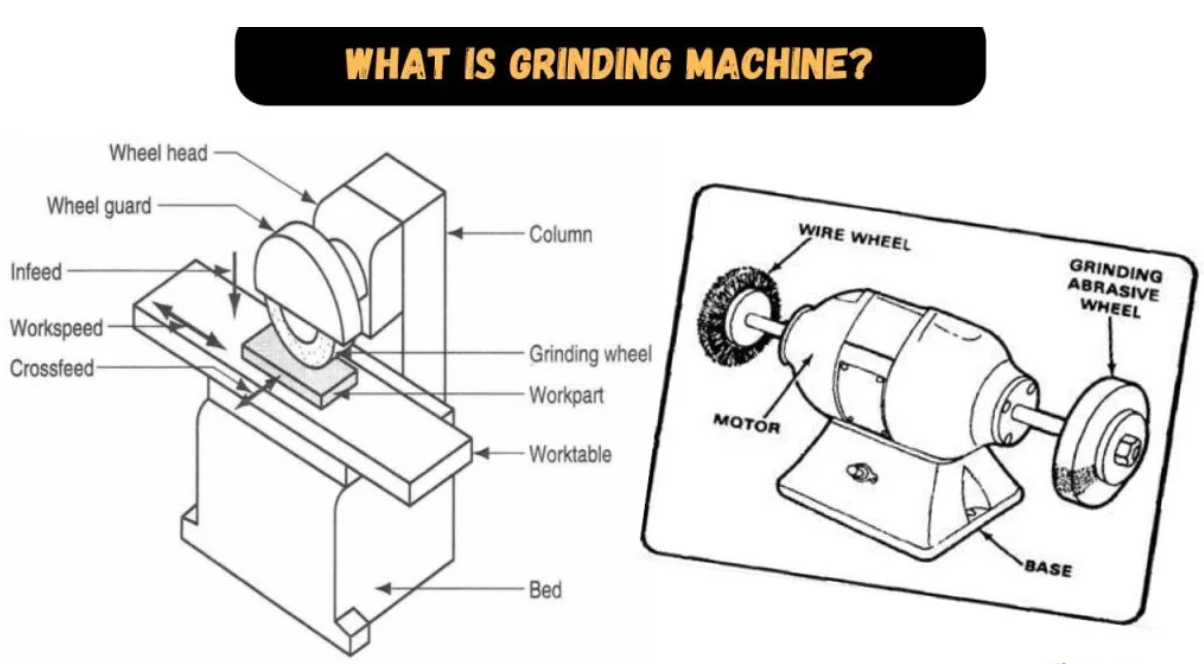
The Core Tool: The Grinding Wheel
The grinding wheel is made of countless hard abrasive grains (such as emery, aluminum oxide) bonded together. Each grain acts like a tiny cutting blade. When the wheel rotates at high speed, these "micro-blades" race across the workpiece surface at extremely high frequency, scraping off the material bit by bit.
Working Principle: Three Stages
The grinding process can be understood in three stages:
Rubbing: The abrasive grain first contacts the workpiece, mainly rubbing and generating heat on the surface, without cutting in yet.
Plowing: The grain begins to press into the workpiece, plowing shallow grooves on the surface, like using a hoe to turn over soil.
Cutting: The grain continues to cut deeper. The material in front is sheared and fractured, forming tiny chips that fly away.
Each grain removes a layer thinner than a human hair each time, but with tens of thousands of grains working simultaneously every minute, the overall processing efficiency is quite high.
Two Motions Working Together
When a grinding machine operates, two motions occur simultaneously:
Primary Motion: The grinding wheel's own high-speed rotation. This is the source of cutting power, reaching speeds of 30-50 meters per second.
Feed Motion: The workpiece or grinding wheel moves slowly. For example, on a surface grinder, the worktable carries the workpiece back and forth in a reciprocating motion, while the grinding wheel feeds downward by 0.001-0.01mm each pass.
With these two motions working together, the grinding wheel can cover the entire surface of the workpiece.
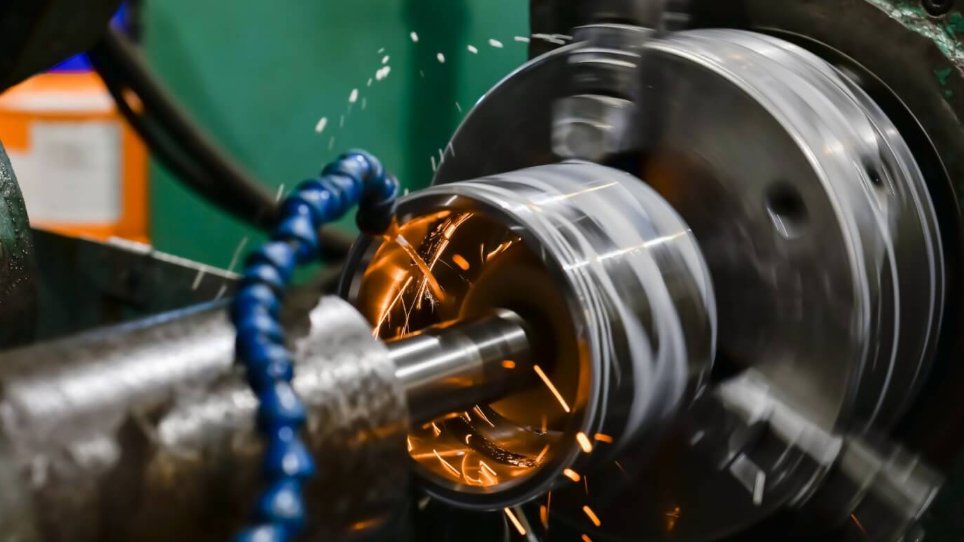
Why Is Grinding Accuracy So High?
Reason 1: Extremely Small Depth of Cut
The depth of cut on a grinder can be controlled to 0.001mm (1 micron) – that's more than seventy times thinner than the diameter of a human hair. Because only a tiny amount of material is removed each pass, dimensional control is extremely precise.
Reason 2: Low Cutting Force
Each grain removes just an extremely thin layer, so the total force acting on the workpiece is very small. This makes grinding particularly suitable for thin sheets, long slender shafts, and other easily deformable parts – a conventional milling machine might bend them with a single pass, but a grinder can handle them steadily.
Reason 3: The Grinding Wheel "Self-Sharpens"
The abrasive grains on a grinding wheel become dull after extended use. But when they reach a certain level of dullness, they automatically fracture or fall off under the grinding force, exposing fresh, sharp grains underneath. This allows the grinding wheel to continuously maintain its cutting ability – unlike ordinary cutting tools that must be removed and re-sharpened when dull.

0086 0755 23170739
0086-0755-24325235
ciky@hainamould.com
Room 1605, 16th Floor, Hongyu Building, No. 495, Donghuan 2nd Road, Longhua Subdistrict, Longhua District, Shenzhen, Gongdong ,China 518109


Copyright 2026 Hainamould.com All rights reserved.
-
 0086 0755 23170739
-
 Facebook
-
 WhatsApp
-
 LinkedIn
-
 TOP
TOP